Being Useful
A reflection on careers in uncertain times

Not long ago, during the pandemic, I walked past a hospitality and tourism training school in Tokyo. Through the windows I could see a few students moving between classrooms, carrying notebooks, preparing for careers built around travel, hotels, and human movement across borders.
At that moment the world had stopped moving.
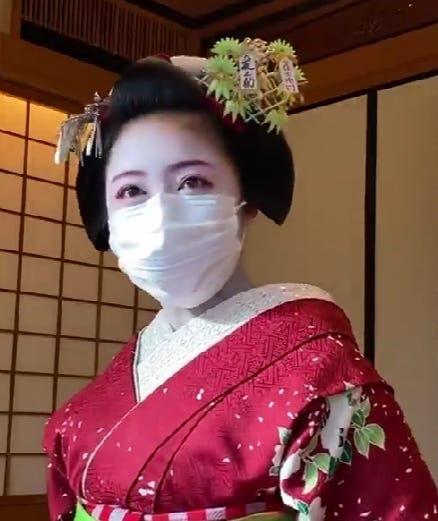
Airports were empty. Borders were closed. International tourism had collapsed almost overnight. Standing outside the school, I found myself wondering what the students inside were thinking. They had chosen a profession that, only months earlier, had seemed stable and global. Now it looked like a dead end.
That moment stayed with me.
It raised a question related to another one I had been thinking about recently: how people find their place, and their value, in systems larger than themselves.
Some examples are striking. In Japan, the familiar Yakult delivery women still travel neighbourhood streets each day with small carts of probiotic drinks. Their role has always been partly commercial and partly social: a brief conversation, a moment of contact, especially for elderly residents living alone. Yet even work like this now sits under a question mark. If technology advances far enough, even small daily services might eventually be automated.
In China, another signal has appeared. Some of the country’s highest-achieving students have begun choosing technical or vocational schools over elite universities. For decades the most prestigious path was clear: attend a top university and enter the professional class. Now there is a growing sense that the safest future may lie in practical technical skills that remain difficult to automate.
These examples may not yet form a pattern. But they create a quiet unease about the question young people face when choosing a path in life.
What advice could one give them?
Some years ago I was talking with a close friend. We had attended the same university and graduated at roughly the same time. At one point the conversation turned to work and careers, and he asked me what I thought were the essential skills in the modern workplace.
My answer was slightly facetious. I said that three abilities mattered.
First, the ability to interpret what your boss really means when he or she says something. Instructions are rarely complete. The real task is understanding intent.
Second, computer skills, though what I really meant was understanding data: how to read it, question it, and decide what action it suggests.
And third, the physical ability to dig a hole if you are told to.
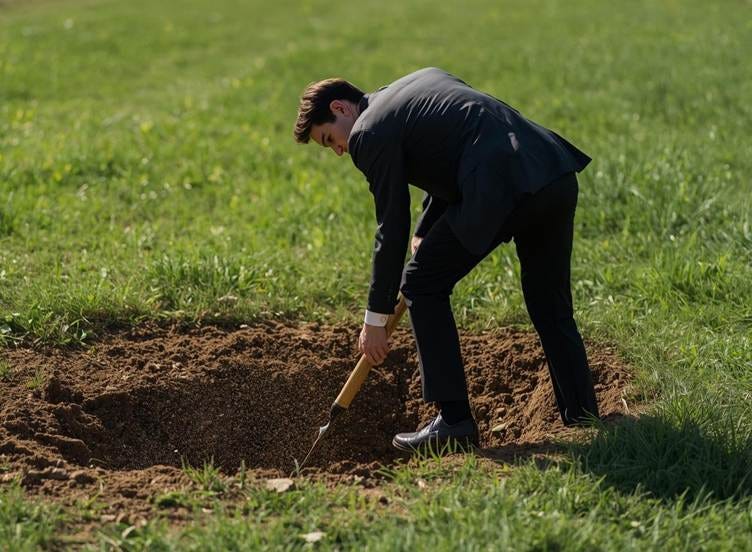
The last point was partly a joke, but only partly. It was shorthand for something simple: the willingness to do necessary work, even when it is practical, mundane, or unglamorous.
Looking back on my own career, those three abilities carried me through many changes in industry, technology, and geography. None of them was tied to a specific profession. They were transferable.
Underlying them was a principle that has always mattered to me: the idea of being useful.
The word “useful” may sound modest, but I have come to think it carries a deeper meaning. In organisations, usefulness often matters more than formal roles. The person who can understand a situation, interpret the data, and help move a problem forward becomes valuable almost anywhere.
This idea did not originate with me. It echoes something my grandfather once believed about Macau.
My grandfather, Dr. Pedro José Lobo, argued that Macau’s continuity depended on its usefulness. The territory was small and sat at the edge of China, yet for centuries it endured because it served as a gateway for trade, finance, and cultural exchange. It was useful to larger systems around it. Its survival depended less on power than on relevance.
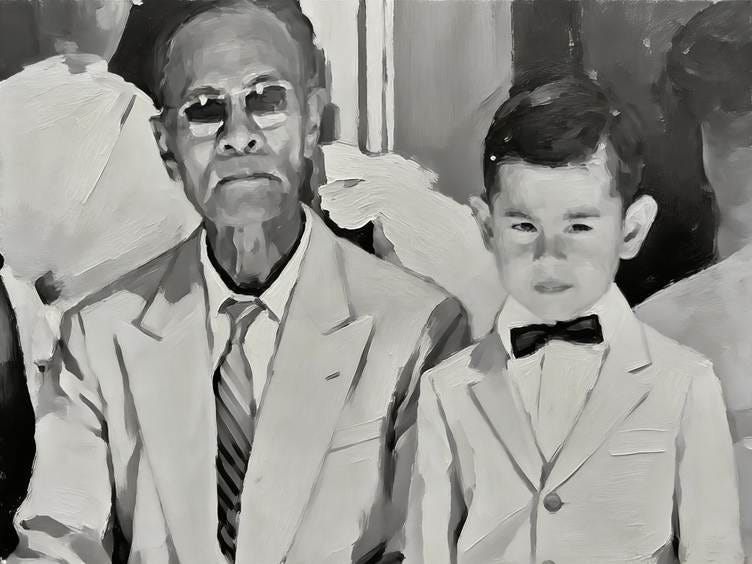
That thought has stayed with me as a lodestar.
Today the same question appears even at the level of governments. Some are beginning to recognise that the future of work may involve repeated transitions rather than stable lifelong careers. In Singapore, recent budget speeches have emphasised the need for continuous retraining and adaptability in an economy increasingly shaped by artificial intelligence and technological change. Rather than promising stability, the emphasis is on helping citizens remain capable of moving between roles as circumstances evolve.
None of this provides an easy answer for the young students I once saw through the windows of that hospitality school in Tokyo. The question they face is real: how does one choose a career when the ground itself may shift?
Perhaps the honest answer is that certainty is harder to offer than it once was.
Yet one thought still seems worth holding on to. In uncertain environments, whether for individuals, organisations, or even small places like Macau — continuity often comes from remaining useful. Not by predicting the future perfectly, but by developing the ability to interpret situations, understand the tools and information at hand, and contribute where one finds oneself.
It may not be the most inspiring career advice.
But it is a principle that has carried many people through times of change, and it may still have something to offer the next generation.
“Everyday is mine,“ the memoir of Dr. Lobo, much impressed me. It was my first foreign book that bought from Macao.